
Current filter:
 Alcohol Licensing
 Animal Control
 Consents
 Elections
 Food Licensing
 Newsletters
 Parking
 Rubbish & Recycling
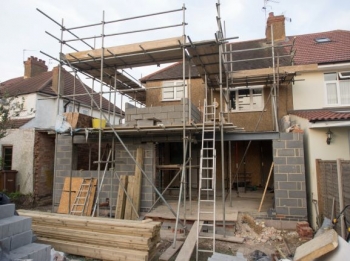
Council receives building consent applications electronically.
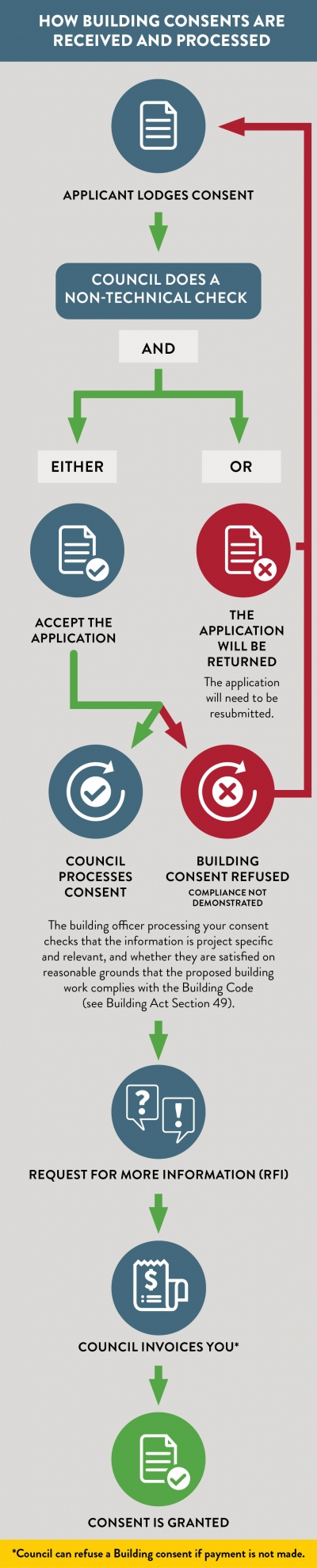
After the consent has been lodged the Council does a non-technical check to ensure the required information is present, e.g. forms complete and relevant plans, specifications and technical information supplied. We also check to ensure the correct property details have been selected.
Council will:
EITHER
Accept the application
The statutory clock starts ticking.
OR
The application will be returned
The application will be returned and the applicant will receive a “Plansmart information request” outlining the additional information required. The application will then need to be resubmitted.
The building officer processing the consent checks that the information is project specific and relevant, and whether they are satisfied on reasonable grounds that the proposed building work complies with the Building Code (see Building Act Section 49).
Other Council teams such as Planning and Infrastructure also check the consent.
Where Council considers there is insufficient information to demonstrate Building Code compliance, Council sends a letter to the applicant requesting this information. This suspends the processing time.
When processing a consent, the building officer checks the design plans and specifications against the performance requirements of the Building Code and Building Act.
If the design specifications and plans don’t clearly prove to Council that the proposed building complies with the Building Code, Council may either:
If more information is required, Council will send a letter to the applicant requesting this. We will copy the letter to the owner so they are aware of the application status. In some cases, your letter may include information required by other Council departments, or they may contact you separately.
We'll grant your building consent once we're satisfied that if the work is done according to the plans, it will meet the provisions of the Building Code.
But be mindful that if a form 4 (section 37 of the NZ Building Act 04) applies to this consent, a certificate will be attached outlining if building works can now start. The form 4 will state:
If a resource consent has not been applied for or issued
A form 4 applies if the Council considers that a Resource consent under the Resource Management Act is not yet been obtained and the Resource consent will or may materially affect the building work to which the application for Building Consent relates.
The consent will be issued once you have paid all associated fees and levies,
Council will upload the invoice to the Objective Build Portal.
Once you have paid your invoice and received your consent via Objective Build, please read it carefully as it contains important information such as:
Note: the consent must be available on site for every inspection.
The Building Act allows Councils 20 working days to process Property Information Memorandums and/or Building Consent applications to the point of either granting or refusing your application. Where your application relates to a multi-use approval the Building Act allows 10 working days.
The Act allows Council to suspend the processing clock where additional information is required to establish Building Code compliance. The clock will restart when the completed information has been received by council.
Council may refuse building consents if the designer has failed to show Building Code compliance.
Your designer may need to design in certain features such as minimum floor heights or specific foundation systems, to take account of any natural hazards your land is subject to. Natural hazards may include:
Council may either:
If your land is subject to natural hazards we suggest you discuss this with a design professional and possibly a lawyer before applying for a building consent. A notification on your Record of Title can lead to wider issues outside of Council’s role.
Data on the risk of rising sea levels to residential properties in coastal areas (November 2023) is used by Hastings District Council when assessing Building Consents in the affected areas, particularly floor heights.
The 2023 Tonkin + Taylor report replaces the 2016 Hawke’s Bay Regional Council inundation data previously used by Hastings District Council to calculate floor heights.
This guidance is in relation to sections 71 to 74 of the Building Act 2004 (the Act) and information the Council will consider when processing building consent applications, particularly in relation to major alterations to a building.
For comprehensive guidance information on the natural hazard provisions of the Act, please refer to the Ministry of Business Innovation and Employment (MBIE) Guidance - Sections 71 to 74 of the Building Act 2004 which is published on the MBIE website.
The Act limits the natural hazards provisions to the "construction of a building, or major alterations to a building", if "the land on which the building work is to be carried out is subject or likely to be subject to 1 or more natural hazards".
Where this situation exists, the Act provides that a building consent can be granted but a notation must be included on the Record of Title.
"Construction of a building” means any new stand-alone buildings.
"Major alterations to a building" are not defined under the Act therefore guidance has been incorporated based on various determinations by the Ministry of Business Innovation and Employment (MBIE).
Council guidance is that "major alterations" are assessed on a case-by-case basis taking into consideration the points below:
| Determining if the proposed work is a major alteration to a building (s71 of the Act) | |
| Particular circumstances of the application and factors considered | Work which may be considered major alterations to a building |
| The degree to which the building work differs from building work that would be exempt from requiring a building consent under Schedule 1 of the Act. | Schedule 1 is relevant when considering the term major in the context of section 71 only in that it can guide the lesser limit of building work considered to be minor and therefore can be used as a point for comparison. |
| The intended use and degree of design and construction complexity. | The use may pose a higher level of risk to occupants/public, or the construction may be more complex than the current building design. |
| The size of the alteration compared with the existing building. The increased footprint of the building and the percentage increase in site coverage. |
The alteration affects more than 30% of the existing floor area of the building. Includes an increase of more than 20m2 to the floor area of the building (this can include the addition of another floor not just an increase in footprint). Is more than 10% increase of site coverage. Is more than 10% increase of site coverage. |
| Allowance for the replacement of existing structures with new work. | Replacement of comparable and consented existing structures which have the same (or higher) use and importance levels. |
| The extent to which the performance of the building work is likely to be affected by hazard conditions. | An addition which forms part of an alteration which increases the effect of the natural hazard on the existing building, land or other property e.g. impacting an overland water flow, or stability of a bank. |
| These factors are not exhaustive. In addition, no one factor will be determinative and the weight to be given to each factor will depend on the circumstances of the case. | |
The examples provided below provide an indication of the type of work that the Council considers to be minor work (i.e., not a major alteration), however each application will be assessed on a case-by-case basis.
As a Building Consent Authority, Council can process all building consents except for those relating to large dams. You must discuss any plans to build a large dam with the Hawke’s Bay Regional Council .
In some cases you may provide technical opinions from design or building professionals or product manufacturers with your application to show how Building Code compliance will be achieved. Your designers should read that information carefully to ensure the Building Code compliance section is current and adequately described. This will help you avoid unnecessary delays.
Council are not obliged to accept statements, and do so at our discretion.
Depending on the circumstances, Council may either:
If your application includes information from an engineer and a “producer statement”, check the statement to see if it covers “all” or “part only” of the work. If it covers “part only”, Council will require a full description of what parts are/are not covered. You should also ensure the engineer is working within their identified field of expertise.
Fire reports are critical to ensuring people are safe when using buildings, you should ensure you are using suitably qualified and experienced design professionals for these reports.
Council expects all fire reports to be concise, clear and project specific. Reports that are not completed by chartered professional fire engineers will likely be peer reviewed by a Council approved chartered professional fire engineer. The cost of the review will be passed on to the owner.
In cases where complex designs need to be supported by a peer review (i.e. by a suitably qualified engineer), Council may seek an additional peer review at their discretion if that peer review is not deemed sufficient. The associated costs will be passed on to the owner.
Once your building consent has been issued, the building work that the consent relates to must be started within 12 months. Otherwise the consent will lapse, and you will have to reapply for a new building consent if you wish to proceed with your building work.
Council will remind you of this date closer to the time, and you may apply for an extension of time provided you do so before the 12 months is up. There is a fee for this service.
Some types of building consent applications need to be forwarded to Fire and Emergency NZ for review. These are described in a gazette notice. Typically Council will check the report to see if the consent requires a Fire and Emergency NZ review.
Council’s expectation is that the fire designer or engineer would correctly state if this is required. Fire and Emergency NZ have 10 working days from receiving the consent to provide feedback to Council. If the designer has incorrectly stated the need for such a review this can hold up your consent.
The Building Act allows many conditions to be applied to a consent and the most common ones relate to our ability to inspect the work and natural hazards. The conditions listed on your building consent are important and you should read them carefully.
If you have any questions you should discuss them with your design or building professional in the first instance.
Building Consent conditions will be included in certain circumstances. These can include the following sections of the Building Act 2004:
Although not a condition of consent, if the proposed works requires Resource Consent approval and a resource consent has not yet been obtained, a form 4 will be attached to the building consent stating that no building work may proceed or that building work may only proceed to the extent stated in the certificate. This is a requirement of section 37 of the Building Act.
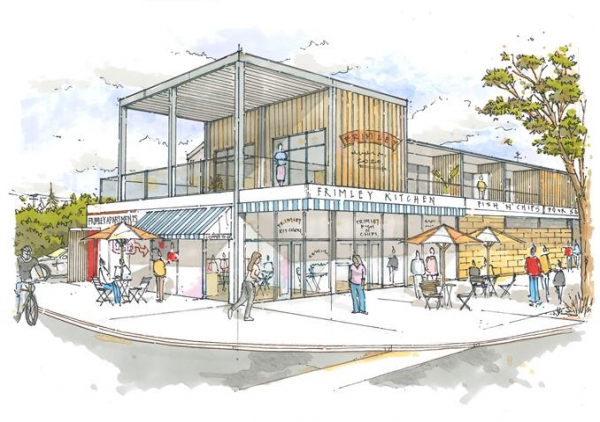 Guide to consents for residential conversion
For builders, property developers and housing providers changing commercial buildings into inner city homes.
Inner city living is gaining popularity in Hastings, and Hastings District Council supports this change. We have developed a guide to provide a brief insight into what is involved from a consenting perspective to change a commercial building into a residential building.
+64 6 871 5000
207 Lyndon Road East,
Hastings 4122
Private Bag 9002, Hastings 4156
Disclaimers | Copyright | Privacy


Disclaimers and Copyright
While every endeavour has been taken by the Hastings District Council to ensure that the information on this website is
accurate and up to date, Hastings District Council shall not be liable for any loss suffered through the use, directly or indirectly, of information on this website. Information contained has been assembled in good faith.
Some of the information available in this site is from the New Zealand Public domain and supplied by relevant
government agencies. Hastings District Council cannot accept any liability for its accuracy or content.
Portions of the information and material on this site, including data, pages, documents, online
graphics and images are protected by copyright, unless specifically notified to the contrary. Externally sourced
information or material is copyright to the respective provider.
© Hastings District Council - / +64 6 871 5000 / customerservice@hdc.govt.nz
 Parks Bookings
 Property
 Road
Road
 My Voice My Choice