
Current filter:
 Alcohol Licensing
 Animal Control
 Consents
 Elections
 Food Licensing
 Newsletters
 Parking
 Rubbish & Recycling
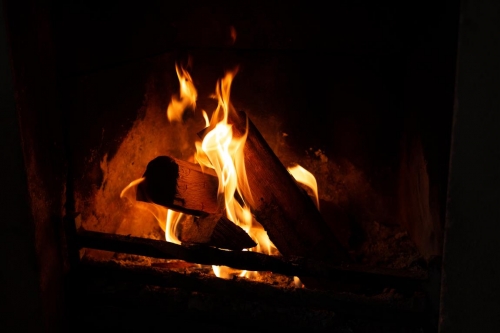 Wood burners
Rules governing fireplaces are designed for keep people safe and to protect the environment. Fireplaces are one of the oldest ways of heating homes but there are significant safety issues associated with their installation, so regulations exist to minimise potential risk to your family.
You must get a Building Consent before installing any fireplace. This helps to ensure the fireplace meets all safety standards.
If you are planning to install a new residential solid fuel fire, you need to fill out and lodge the online Building Consent/PIM Form 2 application form.
Ensure that you apply for a Code Compliance Certificate (CCC) once the installation is complete (see below).
Solid Fuel Heater applications have a fixed fee which allows for one inspection during installation. Additional inspections, if required, will cost extra; see: Council's Fees and Charges page - Solid Fuel heaters.
Council can only approve Building Consent applications for models of solid fuel heaters that have been tested by the Ministry for the Environment. For the full list of tested fires, including brands, models and emission rates, see: Ministry for the Environment.
The heater must comply with the National Environmental Standards for air quality if it is installed on properties of less than 2ha.
Hawke’s Bay Regional Council (which oversees air quality in Hawke’s Bay) has set limits on fireplace emissions within the areas worst affected by air pollution. These areas are called “Air Sheds”. For more information see: Hawke's Bay Regional Council or phone the regional council on +64 6 835 9200. For a map of the Hastings' air shed see the Hawke's Bay Regional Council website.
Hawke's Bay Regional Council has set rules that ban certain types of non-complying fires and older fires from being used. These models will need to be replaced with a complying model or alternative heating system. For more information on the types of fires that can and cannot be used see the Hawke's Bay Regional Council website.
All solid fuel heater installations must be inspected by a Hastings District Council building inspector.
For insert fires (into an existing chimney including those with a wetback), the officer will need to carry out the inspection during the installation of the heater in order to inspect the prepared chimney, any wetback and hot water cylinder components, and the final installation position of the fire.
For free-standing fires (including those with a wetback), the officer will need to carry out the inspection on the completion of the installation.
To book an inspection phone, Council.
If your inspection fails, Council will need to re-inspect the installation and you will be invoiced for additional inspections.
When the installation has been passed, you must complete an application for a Code Compliance Certificate. The building officer who carries out your inspection will provide you with this form. On receiving your signed Application for Code Compliance Certificate, Council will issue your Code Compliance Certificate (subject to any additional fees being paid and/or documentation required).
NOTE: Do not use (light) your fire until Council’s building officer has passed the final inspection and you have applied for and obtained your Code Compliance Certificate.
Using your fire without a Code Compliance Certificate may invalidate an insurance claim related to the heater.
For more information see Council's Code Compliance Certificate page.
+64 6 871 5000
207 Lyndon Road East,
Hastings 4122
Private Bag 9002, Hastings 4156
Disclaimers | Copyright | Privacy


Disclaimers and Copyright
While every endeavour has been taken by the Hastings District Council to ensure that the information on this website is
accurate and up to date, Hastings District Council shall not be liable for any loss suffered through the use, directly or indirectly, of information on this website. Information contained has been assembled in good faith.
Some of the information available in this site is from the New Zealand Public domain and supplied by relevant
government agencies. Hastings District Council cannot accept any liability for its accuracy or content.
Portions of the information and material on this site, including data, pages, documents, online
graphics and images are protected by copyright, unless specifically notified to the contrary. Externally sourced
information or material is copyright to the respective provider.
© Hastings District Council - / +64 6 871 5000 / customerservice@hdc.govt.nz
 Parks Bookings
 Property
 Road
Road
 My Voice My Choice